There is something deeply beautiful about the way oil was once made. A wooden press turning slowly, drawing golden liquid from sun-ripened seeds. No rush, no chemicals, no shortcuts. Just the quiet patience of hands, wood, and nature working together.
If you have ever wondered about the real difference in wood-pressed vs refined oil, you are not alone. Families across the United States are searching for the healthiest cooking oil, one that nourishes the body while honoring the traditions that came before us.
Wood-pressed oil, also called "ghani" or "kolhu" oil, is extracted by slowly crushing seeds inside a wooden mortar. This gentle process uses no heat or chemicals, which may help preserve the oil's natural vitamins, antioxidants, and healthy fats. Refined oil, on the other hand, goes through multiple stages of industrial processing that could strip away many of the nutrients that made it wholesome in the first place.
This guide walks you through the cold-pressed cooking oil health benefits, explores why unrefined cooking oil deserves a place in your pantry, and helps you choose traditionally processed oils over chemically refined ones with confidence.
What Makes Wood-Pressed Oil Different from Refined Oil?
The core difference in wood-pressed vs refined oil lies in how the oil is extracted and processed.
Wood-pressed extraction uses a traditional wooden pestle to crush seeds slowly. The natural friction of wood limits heat, which may help the oil retain its original nutrients and flavor. A review published in the International Journal of Food and Nutritional Sciences found that wood-pressed oils maintained quality parameters within healthy ranges, suggesting they may be a more wholesome option than refined alternatives.
Refined oil, by contrast, typically undergoes high heat, chemical solvents like hexane (a petroleum-derived chemical used to extract maximum oil from seeds, which may leave trace residues in the final product), bleaching, and deodorizing. While this creates a neutral-tasting oil with a longer shelf life, the process may remove many naturally occurring vitamins, antioxidants, and beneficial fatty acids. Research exploring the potential concerns around heavily processed oils suggests that choosing unrefined cooking oil could be a gentler choice for your body.
Understanding the difference between wood-pressed and cold-pressed oils can also help you pick the right unrefined cooking oil for different cooking needs.
Why Does the Conversation Around Wood-Pressed vs Refined Oil Matter?
The growing interest in wood-pressed vs refined oil reflects a deeper shift. More people want to know what truly goes into their food. A study published in the Indian Heart Journal highlights how the quality and type of edible oil plays an important role in overall wellness, particularly when it comes to choosing fats wisely for everyday cooking.
When you compare these two side by side, the differences reach beyond taste. They touch on how your meals may support long-term wellbeing and how the oil was treated before it arrived in your kitchen.
How Do Wood-Pressed and Refined Oils Compare?
When choosing the healthiest cooking oil for your home, it helps to see the differences clearly.
|
Feature |
Wood-Pressed / Cold-Pressed Oil |
Refined Oil |
|
Extraction Method |
Slow, mechanical pressing without heat or chemicals |
High heat, chemical solvents, bleaching, deodorizing |
|
Nutrient Retention |
May retain natural vitamins, antioxidants, and healthy fats |
Many nutrients may be lost during processing |
|
Chemical Additives |
Typically free from chemical residues |
May contain trace amounts of processing solvents |
|
Flavor and Aroma |
Rich, natural taste of the source seed |
Neutral, with little natural flavor |
|
Color |
Golden, natural hue |
Pale, often artificially clarified |
|
Shelf Life |
Shorter, due to lack of preservatives |
Longer, due to extensive processing |
|
Best For |
Everyday home cooking, sauteing, dressings, light frying |
High-volume commercial cooking |
This simple comparison shows why families exploring wood-pressed vs refined oil are leaning toward the gentler, more traditional option.
What Are the Cold-Pressed Cooking Oil Health Benefits?
The health benefits of cold-pressed oil are rooted in one simple truth: gentle extraction may preserve what nature put in. Here are some of the potential benefits of choosing unrefined cooking oil for your everyday meals:
-
May retain natural vitamin E, which could support skin and immune health
-
Could preserve heart-friendly monounsaturated fatty acids (MUFAs)
-
May contain natural antioxidants that could help protect cells
-
Typically free from chemical solvents, artificial additives, and preservatives
-
Tends to carry the authentic aroma and flavor of the source seed
-
May offer a more balanced fatty acid profile compared to heavily processed oils
These cold-pressed cooking oil health benefits make it easy to see why so many families are choosing the healthiest cooking oil they can find, one that is closer to nature.
How Can You Start Seed Oil-Free Cooking at Home?
Embracing seed oil-free cooking does not require a complete kitchen overhaul. It simply means choosing oils that are closer to their natural state.
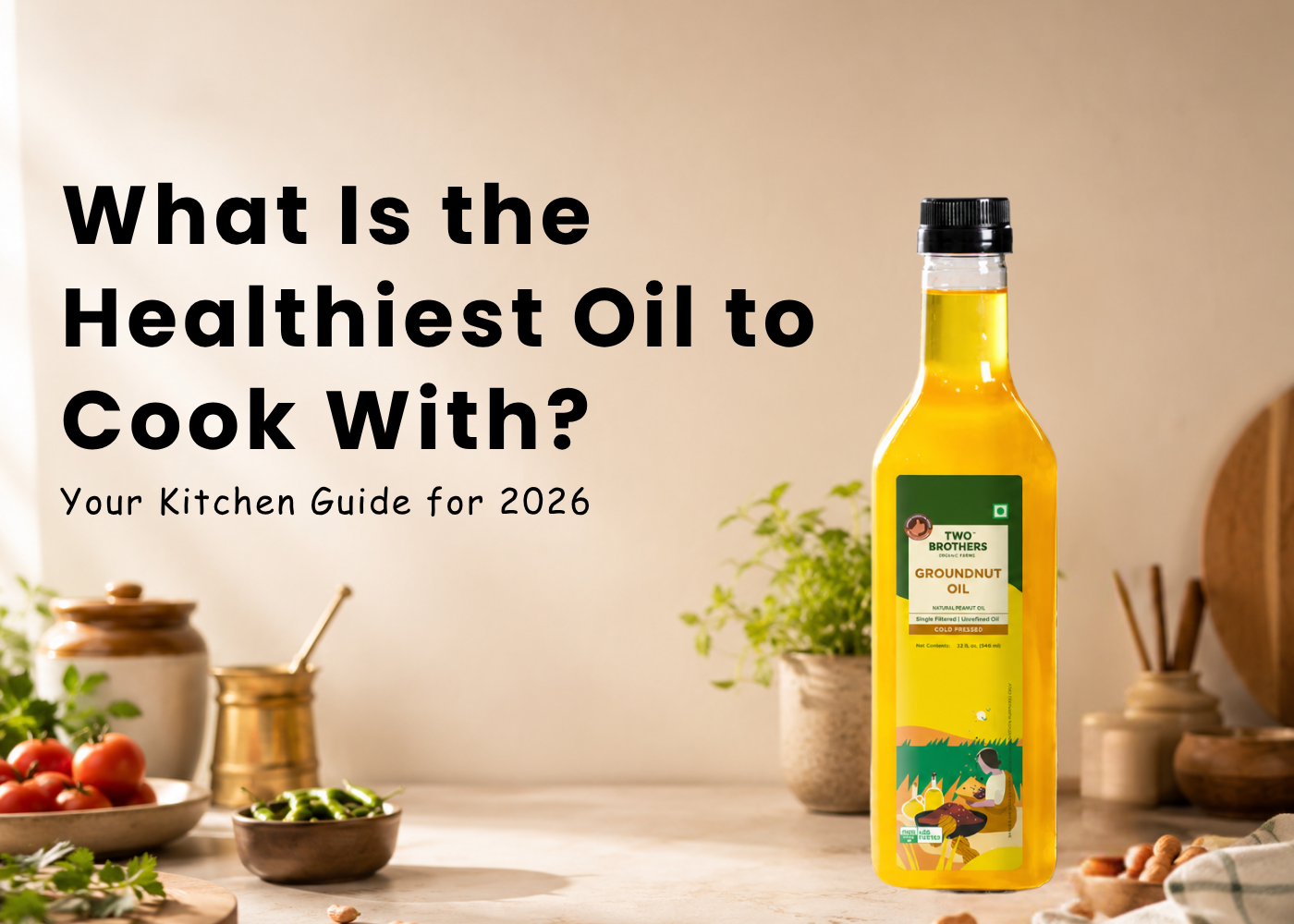
Start by replacing one refined oil at a time. A cold-pressed peanut oil, for example, works beautifully for frying, roasting, and stir-frying. The Cold-Pressed Peanut Oil from Two Brothers India Farms is single-pressed from 100% groundnuts, certified glyphosate-free, and crafted to preserve natural vitamin E and antioxidants.
Here are simple ways to bring seed oil-free cooking into your daily routine:
-
Use cold-pressed peanut oil for high-heat cooking and Asian stir-fries
-
Try cold-pressed coconut oil for baking and traditional recipes
-
Drizzle unrefined cooking oil over salads, grains, and roasted vegetables
-
Read labels carefully and choose single-ingredient oils with no additives
Seed oil-free cooking is not about perfection. It is about choosing a little more care with every meal. The healthiest cooking oil is often the simplest one, made with nothing but the seed and a slow, patient press.
What Makes Unrefined Cooking Oil the Right Fit for Your Family?
The healthiest cooking oil for your family is one that carries nourishment in every drop. When you explore the cold-pressed cooking oil health benefits and understand what separates wood-pressed vs refined oil, the choice becomes clear. Tradition, simplicity, and purity still hold a quiet power.
Two Brothers India Farms offers a thoughtfully curated collection of wood-pressed oils made using traditional extraction methods. Each oil is single-filtered, free from additives, and crafted in small batches to honor the slow, careful way oils were once made.
Conclusion
Choosing the healthiest cooking oil is a small, gentle act of love for your body and your family. Whether you are just beginning your journey toward seed-oil-free cooking or deepening your commitment to cold-pressed cooking oil health benefits, every step matters.
Explore the full range of pure, traditionally crafted oils at Two Brothers India Farms and bring the warmth of heritage back into your kitchen.
FAQs
1. Is wood-pressed oil the same as cold-pressed oil?
They are similar but not identical. Wood-pressed oil uses a traditional wooden mortar, while cold-pressed oil may use a steel expeller. Both avoid high heat and chemicals. You can learn more about how they differ here.
2. What are the main cold-pressed cooking oil health benefits?
Cold-pressed cooking oil health benefits may include better retention of natural vitamin E, antioxidants, and heart-friendly fats. These oils are also typically free from chemical solvents and artificial additives.
3. Can I use wood-pressed oil for deep frying?
Yes. Wood-pressed oils are extracted slowly in a wooden ghani, which keeps temperatures low and preserves the oil's natural composition. Varieties like wood-pressed peanut oil and wood-pressed mustard oil have a naturally high smoke point, making them suitable for frying, roasting, and other high-heat cooking.
4. How do I start seed-oil-free cooking?
Begin by replacing one refined oil at a time with a wood-pressed or cold-pressed alternative. Cold-pressed peanut oil is a great starting point for everyday seed oil-free cooking needs.
5. How should I store unrefined cooking oil?
Store unrefined cooking oil in a cool, dry place away from direct sunlight. Keep the bottle tightly sealed after each use to preserve its natural freshness and aroma.