Every meal you make holds a quiet promise. Before the garlic sizzles, before the spices bloom, your hands reach for a bottle. That single pour of oil shapes the flavor, the nourishment, and the care you bring to your family's table.
Yet with so many choices lining grocery shelves, finding the best cooking oil for health can feel overwhelming. Here is the simple truth: the healthiest oil for cooking is one that matches your recipe, handles heat without breaking down, and carries the kind of fats your body may actually welcome. Let us walk through this together, gently and clearly, so you can pour with confidence every single time.
Why Does Your Choice of Cooking Oil Matter So Much?

Not all oils are made the same way. Some carry heart-friendly unsaturated fats, while others may lose their nutritional value the moment they touch a hot pan. Understanding which oil is best for cooking starts with three simple things: the type of fat it contains, its smoke point, and how it was processed.
The American Heart Association recommends choosing nontropical vegetable oils that are lower in saturated fat and free from trans fats. Oils rich in monounsaturated and polyunsaturated fats may support heart wellness when used as part of a balanced diet. This is why knowing which oil is best for cooking is one of the most meaningful choices you can make in your kitchen.
Which Oil Is Best for Cooking? A Side-by-Side Look
When searching for the best cooking oil for health, it helps to compare your options. Here is a simple table to guide you.
| Oil Type | Primary Fat Type | Approximate Smoke Point | Best Used For |
|---|---|---|---|
| Extra Virgin Olive Oil | Monounsaturated | Medium (around 375 to 405°F) | Dressings, light sauteing |
| Cold-Pressed Peanut Oil | Monounsaturated | High (around 450°F) | Frying, roasting, stir-frying |
| Virgin Coconut Oil | Naturally occurring saturated | Medium (around 350°F) | Baking, light cooking |
| Cold-Pressed Mustard Oil | Mono and polyunsaturated | High (around 480°F) | Indian curries, deep frying |
| Cold-Pressed Sunflower Oil | Polyunsaturated | Medium-High (around 440°F) | Everyday cooking, baking |
Harvard Health suggests expanding your oil choices based on what you cook and the nutritional profile each oil offers. Rotating between a few quality oils may give your body a broader range of beneficial fats.
What Makes a Cooking Oil Truly Healthy?

Finding the healthiest oil for cooking is not about chasing a single quality. It is a gentle balance of several factors working together. Here is what to look for:
- Fat composition: Choose oils rich in monounsaturated or polyunsaturated fats. These may help support cardiovascular wellness when they replace saturated fats in your diet.
- Smoke point stability: A higher smoke point means the oil stays stable during high-heat cooking without releasing harmful compounds.
- Minimal processing: Cold-pressed and wood-pressed oils tend to retain more natural vitamins, antioxidants, and flavor than heavily refined alternatives.
- Nutrient content: Some oils naturally carry vitamin E, omega fatty acids, and polyphenols that could benefit your overall health.
- No additives or chemicals: The best cooking oil for health is free from preservatives, artificial flavors, and trans fats.
A review published in Nutrients highlights how the processing method of an oil may directly influence its nutritional value and stability during cooking. The gentler the extraction, the more nature's goodness stays intact.
How Can You Find a Good Low Fat Oil for Cooking?

If you are watching your fat intake, the idea of a low fat oil for cooking may seem a little confusing at first. All cooking oils contain fat by nature. But the type of fat makes all the difference. When choosing a low fat oil for cooking, focus on options that are lower in saturated fat and completely free from trans fats.
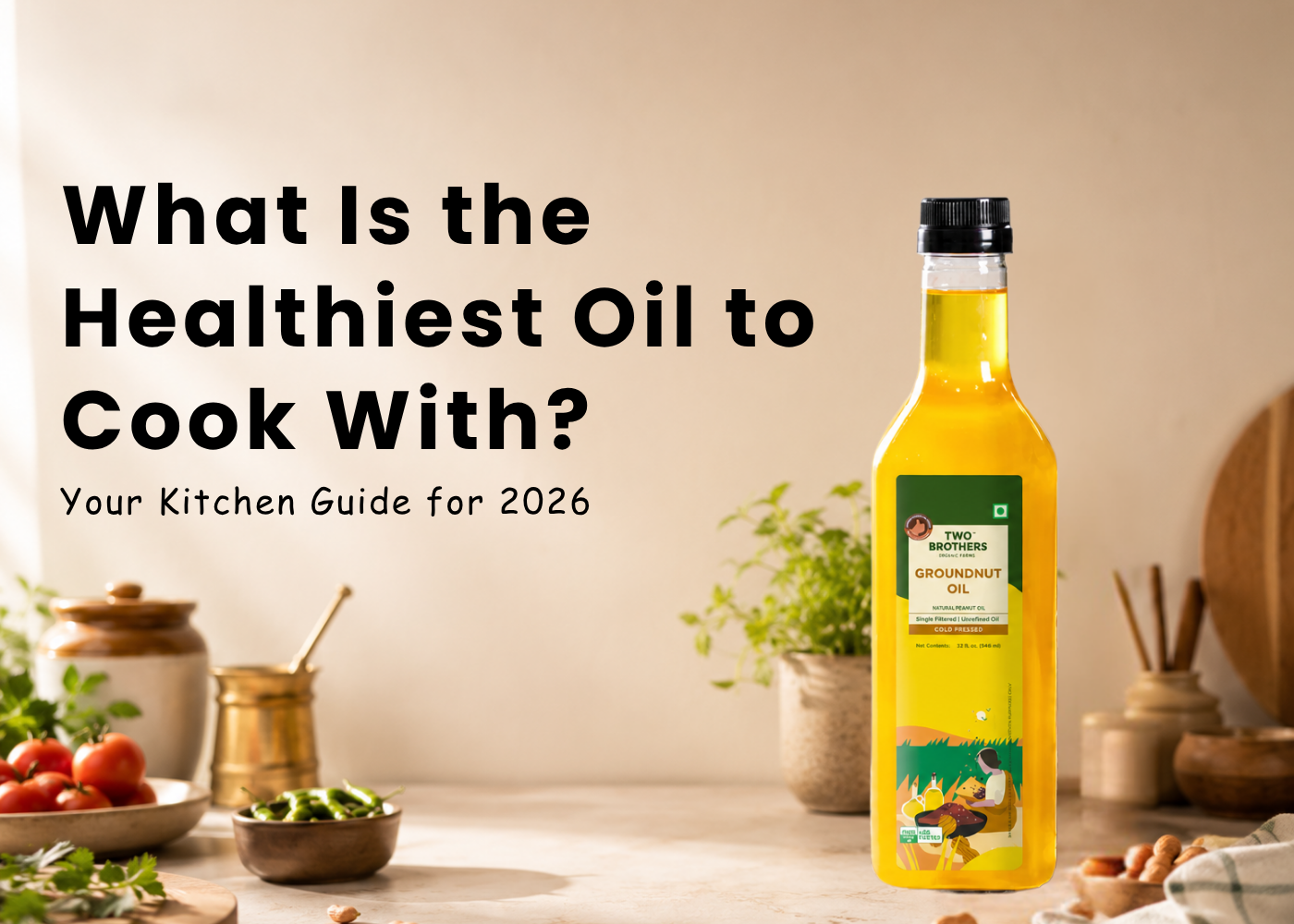
Cold-pressed peanut oil, for example, is rich in heart-friendly monounsaturated fatty acids (MUFA) and naturally free from trans fats. It also contains vitamin E and antioxidants, which may support your overall wellness. Two Brothers India Farms offers a cold-pressed peanut oil made from native variety groundnuts using a slow extraction method. This process preserves the oil's natural nutrients without any additives or preservatives.
Many families seeking a low-fat oil for cooking find that cold-pressed options feel like the right, wholesome choice for everyday meals.
Does the Processing Method Really Change the Oil?
Yes, and this is where the story becomes truly beautiful. Cold-pressed and wood-pressed oils are extracted at low temperatures without chemicals. This gentle process may help retain the delicate vitamins and antioxidants that industrial refining strips away. When you choose the healthiest oil for cooking, consider how it was made.
Two Brothers India Farms follows these time-honored practices, offering oils that are single-filtered and chemical-free. Their cold-pressed peanut oil brings a taste of tradition and purity to your everyday cooking. If you have been exploring which oil is best for cooking for your family, this approach to oil-making may resonate deeply with your values.
What Should You Remember When Buying Cooking Oil?
Understanding which oil is best for cooking also means reading the label with care. Look for terms like "cold-pressed," "wood-pressed," or "single-filtered." Choose oils that are organic, free from genetically modified ingredients, and processed using traditional methods.
The Cleveland Clinic recommends rotating between a few quality oils to enjoy a broader range of beneficial nutrients. Whether you are new to mindful cooking or have always paid attention to what goes into your pan, the healthiest oil for cooking is one that aligns with your recipe, your body, and your values.
For more guidance, Two Brothers India Farms shares helpful insights on choosing the right cooking oil for daily use. A low-fat oil for cooking can still be rich in flavor and nourishment, especially when nature leads the way.
Conclusion
The oil you cook with is more than just an ingredient. It is a quiet act of love, a small promise of care poured into every meal. Choosing the best cooking oil for health does not need to be complicated. Start with oils that are minimally processed, rich in good fats, and made with integrity.
Explore the wood-pressed and cold-pressed oil collection from Two Brothers India Farms and bring the warmth of tradition to your kitchen, one wholesome pour at a time.
Frequently Asked Questions
1. Which oil is best for cooking at high temperatures?
Cold-pressed peanut oil and mustard oil both carry high smoke points. They stay stable under heat and may retain their natural nutrients better than many refined alternatives. They work well for frying, roasting, and deep frying.
2. What is the best cooking oil for health in daily meals?
For everyday cooking, cold-pressed peanut oil, extra virgin olive oil, and sunflower oil are popular choices. Each carries unsaturated fats that may support heart wellness when used as part of a balanced diet.
3. Is there a truly low-fat oil for cooking?
All cooking oils contain fat, but the key is choosing oils with beneficial fats. A low-fat oil for cooking is lower in saturated fat and free from trans fats, like cold-pressed peanut oil or sunflower oil.
4. Can cold-pressed oils handle deep frying?
Yes. Cold-pressed peanut oil, with its naturally high smoke point, works beautifully for deep frying. It stays stable at elevated temperatures and may preserve more natural nutrients than refined oils.
5. How do I know if my cooking oil is pure and unrefined?
Look for labels that mention "cold-pressed," "wood-pressed," "single-filtered," or "chemical-free." Brands like Two Brothers India Farms follow traditional extraction methods that prioritize purity, transparency, and quality in every bottle.