Every Indian kitchen holds a quiet kind of poetry. Some kitchens tell their story through the warm, golden glow of ghee melting over fresh roti. Others speak through the sharp, spirited aroma of mustard oil crackling in a hot pan. The ghee vs mustard oil conversation has been woven into Indian food culture for centuries, and it still sparks genuine curiosity today.
So, which oil is better for cooking Indian food? The honest answer is that both belong in your kitchen, but for different reasons. Each one carries deep regional roots, a distinct personality, and unique qualities that make it irreplaceable. Let us walk through this comparison together, gently and thoughtfully.
What Makes the Ghee vs. Mustard Oil Discussion So Fascinating?
Indian cooking is beautifully diverse. From the coconut oil kitchens of Kerala to the mustard oil households of Bengal, every region has a cooking fat that feels like home. The ghee vs mustard oil conversation reflects this diversity in the most heartfelt way.
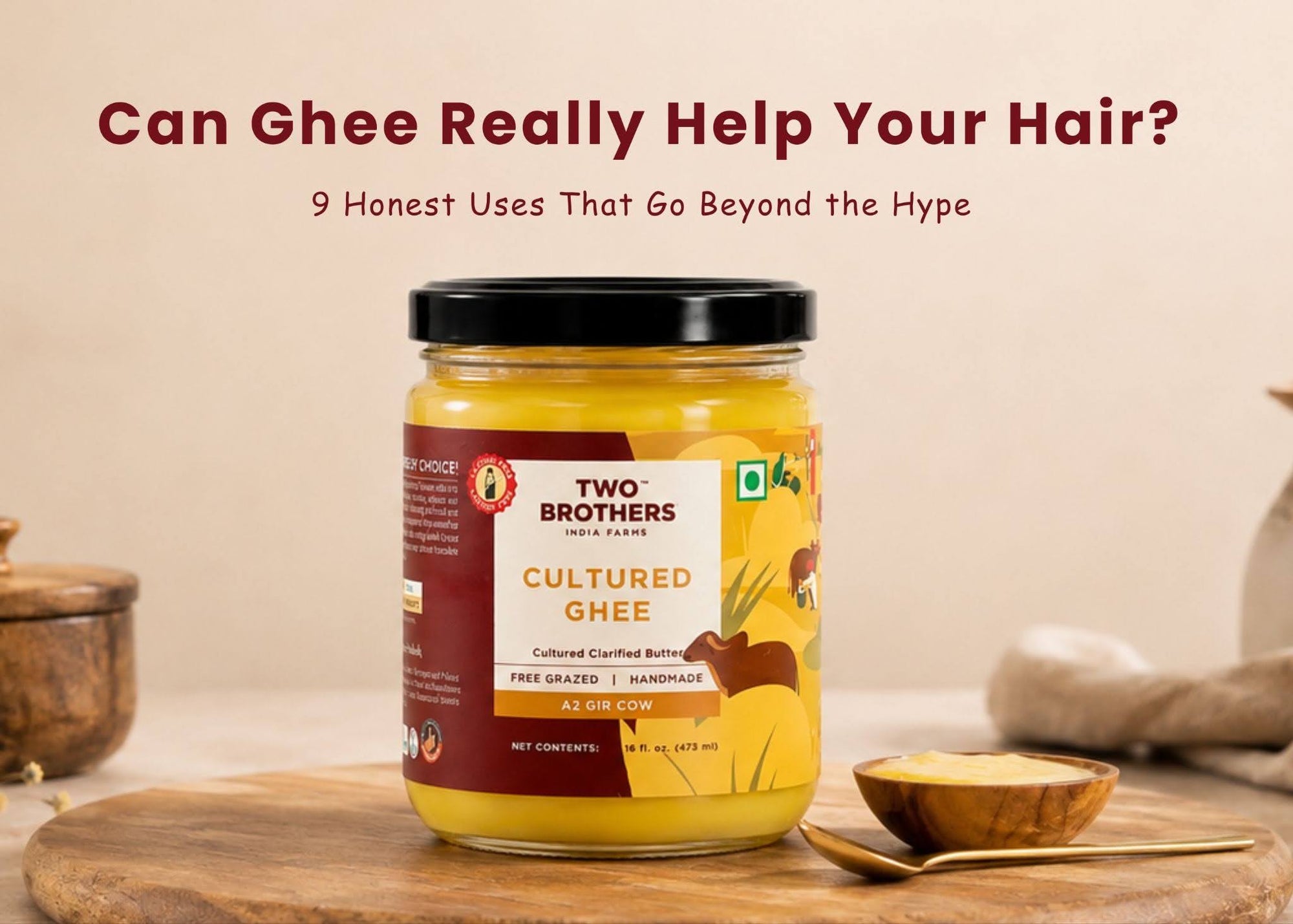
Ghee holds a sacred, time-honored place in Indian heritage. Traditionally prepared through the bilona method, it carries a rich, nutty warmth and a naturally high smoke point. This makes it a trusted companion for frying, tempering, slow cooking, and even baking. Two Brothers India Farms crafts its A2 Gir Cow Cultured Ghee using this ancient hand-churned technique. Made from the milk of free-grazed, pasture-raised Gir cows, this ghee is free from additives, preservatives, and glyphosate.
Mustard oil, on the other hand, brings a bold pungency that defines the cuisines of Eastern and Northern India. When cold-pressed, it retains its natural compounds and vibrant flavor, making it a staple for pickles, stir-fries, and hearty curries. You can explore the everyday benefits of mustard oil in daily cooking to understand why it remains a beloved kitchen essential across so many homes.
When families weigh mustard oil or ghee, the conversation often comes down to the dish on the stove, the region in their heart, and the flavors they grew up loving.
How Do Ghee and Mustard Oil Compare?
Before choosing between mustard oil or ghee for your next meal, it helps to understand what each brings to the table. Here is a simple, side-by-side look.
| Feature | Ghee | Mustard Oil |
|---|---|---|
| Smoke Point | High (suitable for deep frying and roasting) | Moderate to high (suitable for sauteing and stir-frying) |
| Primary Fat Type | Saturated and short-chain fatty acids | Monounsaturated fatty acids |
| Flavor Profile | Nutty, rich, and warm | Pungent, sharp, and bold |
| Common Regional Use | South, West, and North India | East and North India |
| Traditional Processing | Bilona method (hand-churned) | Cold-pressed or wood-pressed |
| Best Suited For | Frying, tempering, baking, Ayurvedic wellness | Pickling, stir-frying, sauteing |
| Lactose Content | Virtually none (removed during preparation) | Not applicable |
Both cooking fats carry properties that may support overall well-being when used as part of a balanced diet. Peer-reviewed research on traditional cooking fats has explored how their composition may influence health outcomes. Separately, studies comparing regional consumption patterns of mustard oil or ghee have examined how dietary traditions could relate to heart health.
For a broader look at traditional cooking fats, Two Brothers India Farms offers a thoughtful guide on whether ghee is a healthier alternative to cooking oil and butter.
Which Oil Is Better for Cooking Indian Food?
This is one of the most common questions home cooks search for. The truth is, which oil is better for cooking Indian food depends entirely on what you are preparing and the flavors you want to bring forward.
Ghee shines in dishes that crave depth. Think of a slow-simmered dal, a flaky paratha, or a fragrant biryani. Its high smoke point means it holds up beautifully under heat without breaking down. This is exactly why ghee has been a trusted choice across generations of Indian families. You can read more about how ghee compares with other cooking oils to understand its unique strengths.
Mustard oil excels where boldness is welcome. A Bengali fish curry, a fiery achar, or a quick vegetable stir-fry all come alive with that pungent, unmistakable kick. Its sharp flavor is nearly impossible to replicate with any other fat.
If you are still exploring which oil is better for cooking Indian food, Two Brothers India Farms has a helpful guide on which oil is best for Indian cooking that walks through your options with care.
When Should You Choose Mustard Oil or Ghee?
Here is a gentle guide to help you decide:
- Choose ghee when you are making sweets, desserts, or dishes where a rich, nutty flavor matters most.
- Choose mustard oil when your recipe calls for bold pungency, especially in pickles or Bengali-style preparations.
- Choose ghee for high-heat cooking like deep frying or tadka, thanks to its naturally high smoke point.
- Choose mustard oil for quick stir-fries and sauteed vegetable dishes that need a sharp, spirited base.
- Choose ghee when you want a cooking fat rooted in Ayurvedic tradition that may support digestion and gut health.
- Choose mustard oil when you want a cold-pressed option with a strong regional identity and vibrant character.
Whether you reach for mustard oil or ghee, the most important thing is choosing something pure, traditionally processed, and free from chemicals. Explore the full ghee collection from Two Brothers India Farms to find a ghee that honors tradition in every golden spoonful.
For more guidance on finding the healthiest oils to cook with, Two Brothers India Farms offers a resource worth exploring.
Can You Use Both Ghee and Mustard Oil in the Same Kitchen?
Absolutely, and many experienced home cooks do exactly this. A common practice in North Indian kitchens is to start a tadka in mustard oil for its sharp aroma, then finish the dish with a spoonful of ghee for warmth and richness.
The ghee vs mustard oil question does not have to be an either-or choice. Both fats can live side by side in your kitchen, each serving a different purpose and adding its own beautiful character to your meals. When you think about which oil is better for cooking Indian food, the wisest answer may be to keep both within arm's reach.
Conclusion
The ghee vs mustard oil conversation is not about declaring a single winner. It is about understanding what each cooking fat brings to your table and honoring the traditions that shaped them. Whether you love the golden warmth of ghee or the fiery spirit of cold-pressed mustard oil, both have earned their place in kitchens that value purity and heritage.
If you are looking for ghee made the traditional way, Two Brothers India Farms offers bilona-made A2 Gir Cow Cultured Ghee, crafted with love from pasture-raised cows and free from additives.
Frequently Asked Questions
Is ghee healthier than mustard oil?
Both carry distinct nutritional properties and may support well-being in different ways. Ghee is rich in fat-soluble vitamins and may support digestion, while mustard oil contains monounsaturated fatty acids. The better choice depends on your dietary needs and cooking style.
Can I use mustard oil and ghee together in cooking?
Yes, many traditional Indian recipes call for both. Starting a dish in mustard oil for bold flavor and finishing with a spoonful of ghee for richness is a common and delicious technique passed down through generations.
Which oil is better for cooking Indian food on high heat?
Ghee has a naturally high smoke point, which makes it a reliable choice for deep frying, tempering, and roasting. Mustard oil also handles heat well, though its pungent flavor may not suit every dish.
Is mustard oil or ghee better for everyday use?
It depends on your regional preference and the dishes you cook most often. Families in Eastern India may use mustard oil daily, while those in other regions may prefer ghee. Both are traditional, time-tested options that can complement each other beautifully.
What makes Two Brothers India Farms ghee different from regular ghee?
Two Brothers India Farms prepares its A2 Gir Cow Cultured Ghee using the traditional bilona method. It is made from the milk of free-grazed Gir cows, is lab-certified glyphosate-free, and contains no additives, preservatives, or artificial ingredients.