There is a quiet kind of worry that settles into your mornings when you live with a thyroid condition. It hides inside the simplest question: what should I eat today? And for many, wheat is the first thing to go. But here is the truth, gently told. Not all wheat carries the same story.
If you have been wondering whether wheat for thyroid patients is truly off limits, the answer is more nuanced than a simple yes or no. For most people managing hypothyroidism, the concern may not be wheat itself. It could be the kind of wheat sitting in their pantry. Ancient grains like Khapli wheat (emmer wheat) offer a gentler path, one that is naturally lower in gluten and richer in fiber. And that changes the conversation entirely.
What Does Hypothyroidism Mean for Your Everyday Meals?
Hypothyroidism occurs when the thyroid gland does not produce enough thyroid hormone. This can affect digestion, metabolism, energy, and even mood. Naturally, people begin examining every ingredient in their kitchen, and wheat for thyroid patients becomes one of the most debated topics.
Some wellness circles suggest removing wheat entirely. Others encourage a more thoughtful approach. Thyroid health depends on a delicate balance of nutrients, including fiber, selenium, zinc, and iodine. Rather than eliminating an entire food group, understanding which type of wheat supports that balance could be the wiser question to ask.
Is Wheat Bad for Thyroid, or Is It the Wrong Kind of Wheat?
This is the question worth sitting with. Is wheat bad for thyroid function across the board, or has modern wheat simply changed too much from what our ancestors ate?
Modern commercial wheat has been hybridized over decades to increase yield and gluten content. Research comparing ancient and modern wheat varieties suggests that modern bread wheat has seen notable shifts in its protein and starch composition over time. These changes may contribute to digestive discomfort for sensitive individuals.
For people with autoimmune thyroid conditions like Hashimoto's thyroiditis, there is growing interest in the relationship between gluten and thyroid autoimmunity. Some researchers have explored the idea that certain gluten proteins could resemble thyroid tissue, potentially triggering immune responses in susceptible people. However, this area of study is still evolving, and broad conclusions cannot yet be drawn.
So when someone asks if wheat is bad for the thyroid, the answer often depends on the type of wheat and the individual's sensitivity level. A gluten-free approach may help some, while others could do well with a naturally low-gluten ancient grain instead. The goal is not to fear wheat. It is to choose it wisely.
Why Could Khapli Wheat Be a Better Atta for Hypothyroidism?
This is where old wisdom meets modern understanding. Khapli wheat, also known as emmer wheat, is one of the oldest cultivated grains on earth. Unlike modern wheat, it has not been hybridized for industrial use. Its gluten structure and nutrient profile remain closer to what traditional diets once provided.
For anyone searching for a suitable atta for hypothyroidism, Khapli wheat offers several gentle advantages.
Khapli Wheat vs. Modern Wheat: A Quick Look
| Feature | Khapli (Emmer) Wheat | Modern Commercial Wheat |
|---|---|---|
| Gluten Content | Naturally lower | Higher due to hybridization |
| Dietary Fiber | Higher | Lower in refined forms |
| Glycemic Index | Lower | Higher |
| Genetic Modification | Unmodified ancient grain | Hybridized for yield |
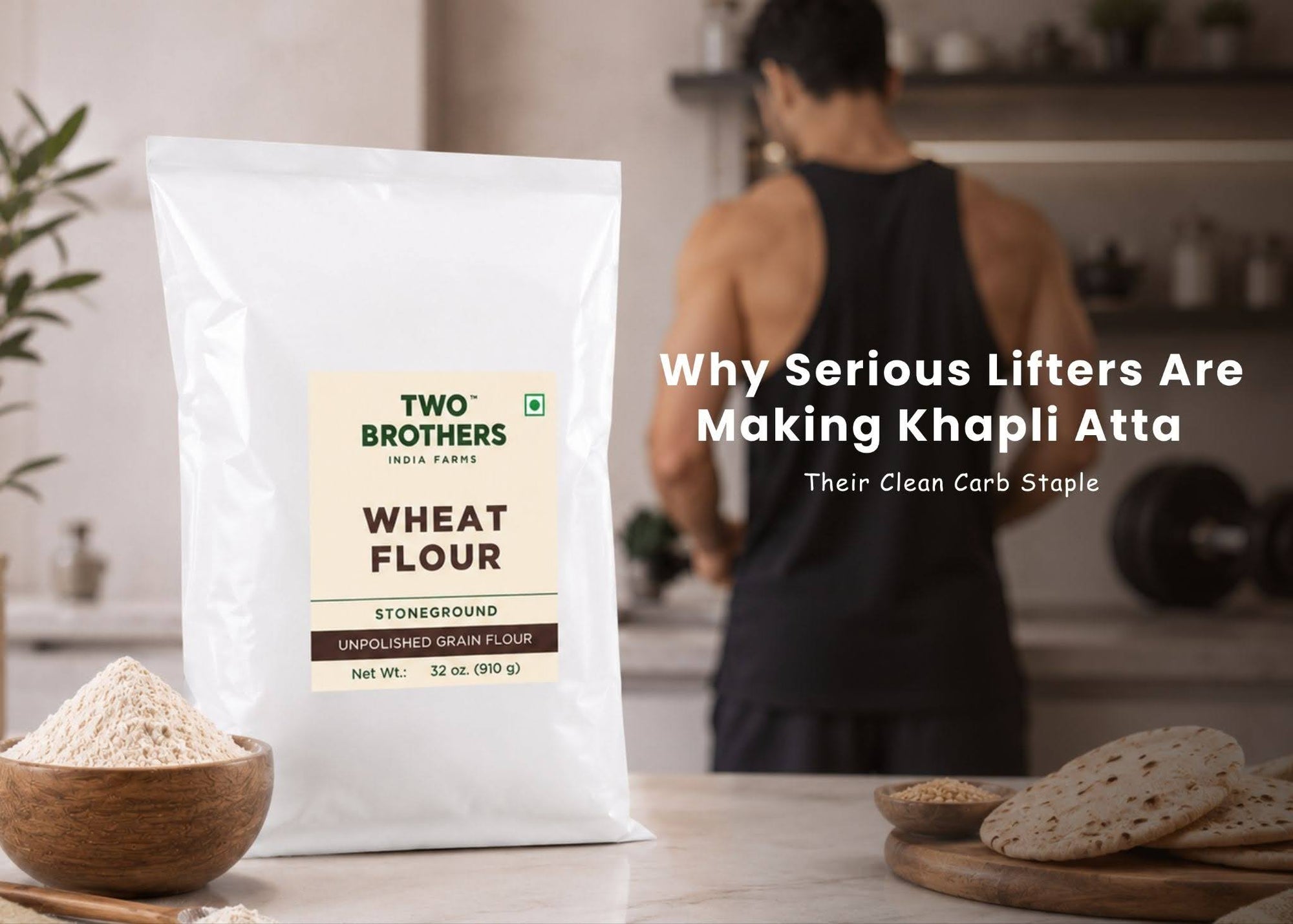
The Two Brothers India Farms Khapli Wheat Atta is stone-ground from ancient emmer wheat, preserving the grain's natural fiber and nutrients. It is also certified glyphosate-free, non-GMO, and crafted with a deep commitment to purity. For those who want a trustworthy atta for hypothyroidism, this feels like a homecoming to the kind of wheat your grandmother once knew.
How Does Fiber in Wheat Support Thyroid Wellness?
When people debate whether wheat for thyroid patients is safe, fiber rarely gets the spotlight it deserves. Yet fiber plays a quiet, essential role. It supports healthy digestion, encourages regular bowel movements (something often disrupted in hypothyroidism), and may help steady blood sugar levels.
Studies exploring connections between wheat-based foods and thyroid-related markers continue to expand our understanding of this relationship. Meanwhile, research into the nutritional richness of emmer wheat highlights why ancient varieties may offer benefits that modern wheat has lost along the way.
A fiber-rich atta for hypothyroidism could support the slow, steady digestion that thyroid patients often need. Khapli wheat naturally delivers more dietary fiber than its commercial counterparts, making it a thoughtful addition for anyone choosing wheat for thyroid patients with care and intention.
How Can You Bring Khapli Wheat Into Your Daily Kitchen?
Switching to Khapli wheat does not require learning something entirely new. Here are a few simple, nourishing ways to welcome it home:
- Soft, warm rotis and chapatis made with Khapli protein flour using a little extra warm water for the perfect dough
- Wholesome parathas stuffed with seasonal vegetables for a fiber-rich meal
- Homemade Khapli wheat recipes like pancakes, porridge, and rustic flatbreads
- Nutrient-dense lunchboxes for busy working adults who need sustained energy through the day
The nutty, earthy flavor of Khapli atta brings a warmth to everyday meals that refined flour simply cannot match.
What Should You Remember When Choosing Wheat for Thyroid Health?
Not everyone with a thyroid condition needs to give up wheat. For many, the wiser step is choosing wheat that is closer to nature, lower in gluten, and richer in fiber. If you have celiac disease, all forms of wheat should be avoided. But if you are among the many who simply want a gentler atta for hypothyroidism, Khapli wheat deserves a place in your kitchen.
Is wheat bad for the thyroid? Not when you choose the right one. The most important step is always to speak with your healthcare provider about your individual needs. And when you are ready to make the switch, Two Brothers India Farms offers a stone-ground, glyphosate-free Khapli atta that honors both tradition and your body's needs.
A Gentle Conclusion
The question of whether wheat is bad for the thyroid does not have to end in fear. It can begin with curiosity, and it can lead you to something ancient, something whole. Khapli wheat is not a cure, but it is a step toward choosing food that works with your body rather than against it. Explore the Two Brothers India Farms Khapli Wheat Atta and bring the quiet wisdom of an ancient grain into your everyday kitchen.
Frequently Asked Questions
Can thyroid patients eat wheat every day?
Many thyroid patients can enjoy wheat daily, as long as they choose a gentle, low-gluten variety. Khapli wheat is naturally lower in gluten and higher in fiber, which may make it a more comfortable daily choice for those managing hypothyroidism.
Is wheat bad for thyroid if you have Hashimoto's?
Some early research suggests gluten may trigger immune responses in certain individuals with Hashimoto's thyroiditis. If your doctor recommends reducing gluten, a low-gluten ancient grain like Khapli wheat could be a helpful alternative to explore.
What makes Khapli wheat a good atta for hypothyroidism?
Khapli wheat is an unmodified ancient grain with naturally lower gluten, higher dietary fiber, and a low glycemic index. These qualities may support digestion and blood sugar regulation, both of which are important for thyroid wellness.
Does Khapli wheat contain gluten?
Yes, Khapli wheat does contain gluten, but in significantly lower amounts than modern commercial wheat. It is not suitable for people with celiac disease, but it may be gentler for those with mild sensitivities.
How is Two Brothers India Farms Khapli Atta different from regular atta?
Two Brothers India Farms Khapli Atta is stone-ground from ancient emmer wheat, certified glyphosate-free, and non-GMO. It preserves the grain's natural fiber and nutrients while offering a distinctive nutty flavor and a low glycemic index.