Glyphosate is a broad-spectrum herbicide — the active ingredient in Roundup — that leaves residues on conventionally grown grains, legumes, and oats when sprayed as a pre-harvest desiccant. It is the most widely used agricultural chemical in the world, and according to a 2022 CDC study, detectable glyphosate levels were found in more than 80% of urine samples from U.S. adults and children.
A glyphosate-free food is one that has been grown without glyphosate application or independently tested to confirm residue levels below detectable thresholds — typically under 0.01 ppm for Glyphosate Residue Free (GRF) certification. This guide covers which foods carry the highest glyphosate risk, which are naturally safer, and how to build a verified glyphosate-free list for your household.
What Is Glyphosate and Why Does It Matter?
Glyphosate is the active ingredient in many commercial weed killers, introduced to agriculture in 1974. Farmers spray it on crops not just to control weeds, but also as a pre-harvest drying agent, a practice called desiccation. This means glyphosate can settle directly onto the grains, legumes, and oats that eventually reach your kitchen.
According to a 2022 study by the U.S. Centers for Disease Control and Prevention, more than 80% of urine samples from both children and adults contained detectable glyphosate levels. While regulatory bodies maintain it's safe at current exposure levels, independent research suggests potential concerns, particularly with long-term, low-level exposure.
The International Agency for Research on Cancer classified glyphosate as "probably carcinogenic to humans" in 2015, while studies have also explored possible links to endocrine disruption and impacts on gut health. For families seeking truly clean eating, avoiding glyphosate becomes not just a preference, but a protective choice.
Glyphosate in Food: How Residues Enter the Supply Chain
Most people assume glyphosate contamination only affects food grown in obviously pesticide-heavy conditions. In practice, residue enters the food supply through several routes that most consumers are not aware of — and some of them happen to foods that look clean on the shelf.
1. Pre-harvest desiccation
Glyphosate is commonly applied to wheat, oats, barley, and legumes just before harvest to dry the crop uniformly and speed up the harvest window. This is standard practice in conventional farming across the USA, Canada, and parts of Europe. Because it is applied so close to harvest, residue levels in the final grain are typically higher than in crops where glyphosate was only used as a weed killer during the growing season. This is why conventional oat-based foods — porridge, granola bars, breakfast cereals — consistently show up in US contamination testing data.
2. Systemic absorption through plant tissue
Unlike contact pesticides that coat the surface of a plant and can be washed off, glyphosate is a systemic herbicide. The plant absorbs it through its leaves and roots, and it travels through the vascular system. This means residues are present in the internal tissue of the plant, not just on the skin or outer leaves. Peeling and washing reduce surface exposure but cannot reach systemic residues. This is the core reason why buying certified organic or Glyphosate Residue Free products matters more than careful washing.
3. Cross-contamination during processing and transport
Facilities that handle both conventional and certified crops can transfer glyphosate residues through shared storage bins, transport vehicles, and processing equipment. This is a well-documented issue in grain handling and one reason why the Glyphosate Residue Free certification from the Detox Project tests the finished product rather than relying solely on farm-level practices. A product can be made with organically grown grain and still carry residue from processing contact with conventional grain.
4. Animal feed pathways
Livestock fed on conventional grain containing glyphosate residues can carry those residues into meat, dairy, and eggs. This is a less widely understood exposure route. It is part of why pasture-raised and 100% grass-fed certifications matter for animal products — animals fed on certified organic or non-GMO feed are less likely to have elevated residue levels in their tissue. For dairy specifically, looking for organic certification or pasture-raised labelling is the most practical indicator.
Understanding these pathways lets you make targeted choices rather than trying to overhaul your entire diet at once. The highest-priority switches are wheat-based products, conventional oats, soy products, and conventionally farmed meat. Start there and you will reduce the majority of your dietary glyphosate exposure.
Which Foods Are Most Likely to Contain Glyphosate?
Certain crops carry higher glyphosate residue risks due to common agricultural practices in the USA. Here's what testing has consistently revealed:
High-Risk Foods: The Glyphosate Culprits
|
Food Category |
Common Products |
Why High Risk |
|
Grains & Cereals |
Oats, wheat, barley, rye, bread, pasta, granola |
Often treated with glyphosate before harvest for drying |
|
Legumes |
Lentils, chickpeas, beans |
Desiccated with glyphosate; residues remain in dried form |
|
Corn & Soy Products |
Tortillas, chips, tofu, soy milk, protein powders |
Many varieties are genetically modified to resist glyphosate |
|
Snacks & Processed Foods |
Crackers, cookies, protein bars, nut butters |
Contain ingredients from high-risk crop sources |
Your Complete Glyphosate-Free Food List in USA
Building a clean pantry means knowing which foods are naturally safer and which require certified organic or tested alternatives.
Fruits & Vegetables: The Clean Choices
When shopping for produce, prioritize the Environmental Working Group's "Clean Fifteen", conventionally grown items with consistently low pesticide residues:
- Avocados
- Sweet corn (organic preferred to avoid GMO)
- Pineapple
- Onions
- Papaya
- Sweet peas (frozen)
- Asparagus
- Cabbage
- Kiwi
- Mangoes
- Sweet potatoes
- Watermelon
- Carrots
For fruits and vegetables not on this list, especially apples, grapes, and potatoes, choose certified organic whenever possible.
Grains & Flours: Choose Wisely
Ancient grains and certified products offer safer paths:
- Certified glyphosate-free oats (brands like One Degree Organic Foods)
- Stone ground Emmer wheat flour – naturally lower in gluten with 50% higher fiber than conventional wheat
- Organic quinoa
- Organic buckwheat
- Organic millet
- Organic brown rice
- Amaranth and teff
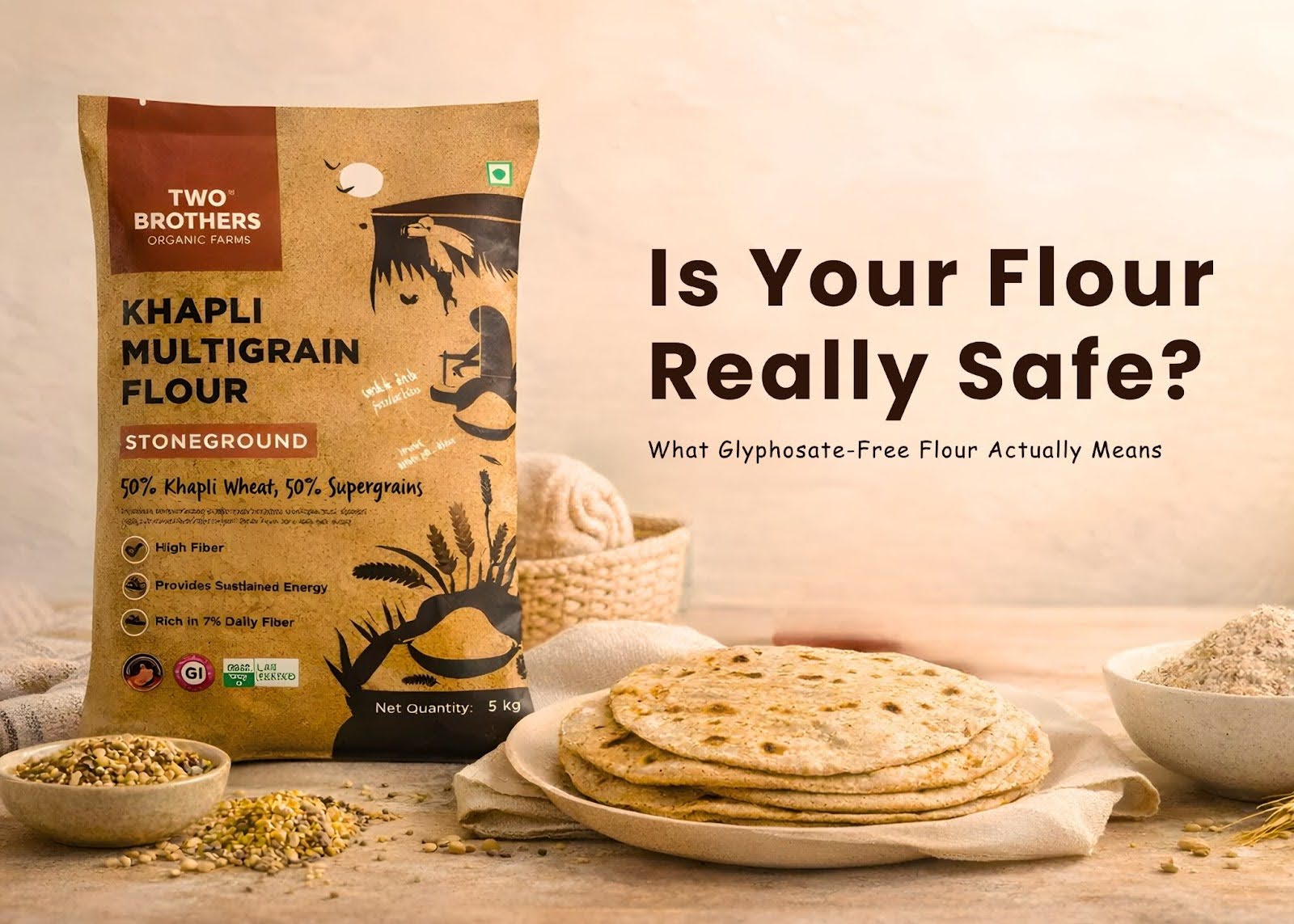
Two Brothers Organic Farms offers India's first certified glyphosate-free Khapli Atta, stone-ground from ancient Emmer wheat. With 50% lower gluten and a gentle, nutty flavor, it transforms everyday rotis into nourishment your body recognizes and trusts.
Proteins & Dairy: Pasture to Plate
Animal products carry glyphosate when livestock consume contaminated feed. Look for:
- Organic grass-fed beef
- Organic pasture-raised chicken and eggs
- Wild-caught fish (salmon, sardines, cod)
- A2 cultured ghee from pasture-raised Gir cows – like Two Brothers' certified glyphosate free A2 cultured ghee, crafted using the traditional Bilona method

When cows graze on chemical-free pastures and receive uncontaminated feed, the ghee and milk they produce remain pure, free from the herbicide residues that can accumulate through conventional grain-based diets.
Oils, Nuts & Seeds: Cold-Pressed Purity
- Organic almonds and walnuts
- Organic chia and flax seeds
- Extra virgin olive oil
- Cold-pressed avocado oil
- Virgin coconut oil
- Organic sunflower seeds
Which Foods Have the Highest Glyphosate Residue? (And What to Choose Instead)
Glyphosate contamination is not evenly distributed across all foods. Crops treated with glyphosate as a pre-harvest desiccant carry the highest residue risk because the herbicide is applied directly to the mature plant days before harvest, allowing it to bind into the grain or seed tissue.
Highest-risk foods (prioritize organic or GRF-certified versions):
- Oats and oat-based cereals: Consistently test highest; EWG found glyphosate in more than 95% of conventional oat-based food samples.
- Wheat and wheat flour: Widely desiccated before harvest; residues transfer into bread, pasta, and crackers.
- Soybeans and soy products: Over 67% of conventional soy samples tested positive per EWG 2020 data.
- Chickpeas, lentils, and legumes: EWG found glyphosate in more than 80% of conventional hummus and chickpea samples.
- Corn and corn-derived products: Heavily treated; residues appear in corn tortillas, chips, and popcorn.
Naturally lower-risk foods (still choose organic where available):
- Fresh fruits and vegetables not on the EWG Dirty Dozen, including avocado, pineapple, asparagus, and cabbage.
- Pasture-raised meats and eggs from farms not using glyphosate-treated feed.
- Organic ancient grains: Khapli wheat, millets, amaranth, and buckwheat grown under certified organic practices carry substantially lower residue risk.
Practical rule: if a packaged product contains conventional oats, wheat, soy, or corn as a primary ingredient and does not carry organic or Glyphosate Residue Free certification, treat it as a risk until confirmed otherwise.
Glyphosate-Free Snacks: Safe Packaged Options for Every Day
Snacking is one of the easiest ways glyphosate residue enters your diet without you noticing. Conventional crackers, granola bars, and breakfast cereals are among the most heavily contaminated packaged foods in US testing data — largely because they are made from conventionally grown wheat and oats, which are two of the highest-risk crops. Processed snack foods also often combine multiple contaminated ingredients in one product.
The good news is that safe alternatives exist across every snack category. Here is what to look for:
1. Crackers and rice cakes
Choose products made with certified organic or Glyphosate Residue Free certified grains. Lundberg Family Farms makes certified organic rice cakes that are widely available. Mary's Gone Crackers uses certified organic seeds and grains. Avoid conventional graham crackers, saltines, and standard granola bars — these regularly appear in US contamination datasets. If a cracker's ingredient list starts with enriched wheat flour and does not carry an organic certification, assume risk.
2. Nut butters and whole nuts
Plain organic nut butters are low-risk when made from certified organic ingredients. Conventional peanut butter is a specific concern because peanuts are a legume and legumes are commonly treated with glyphosate as a pre-harvest desiccant. Choose certified organic peanut, almond, or sunflower butter. Whole organic nuts and seeds are among the safer packaged snack options overall. The low-moisture environment and absence of grain ingredients make them a lower-risk category even in conventional settings, though organic is preferred.
3. Protein bars and protein powders
This category has significant contamination variation. Organic certification alone is not sufficient here — look specifically for the Detox Project's Glyphosate Residue Free seal, which confirms product-level laboratory testing. Several US protein powder brands carry this certification, including some oat-based and plant protein lines. For protein bars, check the ingredient list for conventional oats, soy crisps, or brown rice syrup — these are common glyphosate vectors in otherwise health-focused bars.
4. Dried fruit and fruit-based snacks
Organic unsulphured dried fruit is a reliable low-risk snack. Avoid conventional dried fruit that may have been treated with sulphur dioxide, which is a separate concern from glyphosate, but certified organic dried fruit avoids both. Fruit leather and pure fruit snacks made from organic ingredients are generally safe choices. Where cross-contamination is a concern, the Detox Project certification gives the clearest confirmation.
A practical rule: if the snack contains conventional oats, wheat, soy, or corn as a primary ingredient and does not carry organic or Glyphosate Residue Free certification, treat it as a risk until confirmed otherwise.
How to Build a Glyphosate-Free Diet: Practical Tips
1. Prioritize Certified Labels
Look for two key certifications:
- USDA Organic – prohibits synthetic herbicides, including glyphosate
- Glyphosate Residue Free (The Detox Project) – third-party tested to contain less than 10 ppb (parts per billion)
2. Shop the Perimeter
Whole foods: fresh produce, pasture-raised meats, and traditional dairy carry lower contamination risks than processed center-aisle products.
3. Ask About Sourcing
When shopping at farmers markets, ask growers directly about their weed control methods. Many small farms avoid glyphosate even without formal organic certification.
4. Cook From Scratch
Preparing meals at home using certified ingredients gives you complete control. Simple dal made with organic lentils, rotis from tested khapli atta, and vegetables sautéed in pure ghee become acts of protection and love.
5. Wash and Peel When Necessary
While washing cannot remove glyphosate absorbed into plant tissue, it can reduce surface residues on conventional produce. Peeling items like potatoes and carrots offers additional protection.
Understanding Glyphosate Testing and Safety Standards
Research suggests that even low-level glyphosate exposure may pose health concerns over time. A 2023 study published in the journal Ecotoxicology and Environmental Safety found that glyphosate-based herbicides could affect neurological function and gut microbiome health at levels currently considered "acceptable" by some regulatory agencies.
Third-party testing reveals the gap between regulatory limits and actual safety. While the EPA allows up to 30,000 ppb (30 ppm) of glyphosate in certain grains, independent scientists and health advocates argue for much stricter standards, especially for foods consumed daily by children.
Choosing products certified as "Glyphosate Residue Free" ensures testing has confirmed levels below 10 ppb (parts per billion), a standard far more protective than government maximums.
Glyphosate-Free Grains: Safest Certified Options (2026)
Transitioning to Glyphosate-Free: Start Small, Choose Well
You don't need to overhaul your entire pantry overnight. Begin with the foods your family eats most often:
- Morning staples: Switch to certified glyphosate-free oats or ancient grain porridge
- Daily bread: Choose organic whole grain or khapli wheat flour for home baking
- Cooking fat: Replace conventional oils with pure A2 cultured ghee from pasture-raised cows
- Snacks: Opt for organic hummus, tested chickpeas, and certified nut butters

Small shifts compound into meaningful protection. Each certified ingredient you choose is a quiet rebellion against industrial shortcuts, a return to food as it was meant to be.
Conclusion
Building a glyphosate-free food list isn't about perfection; it's about informed, intentional choices. From certified organic produce to ancient grains milled with care, every selection honors your body's wisdom and your family's wellbeing.
Ready to bring purity back to your kitchen? Explore Two Brothers Organic Farms' certified glyphosate-free collection, where tradition meets transparency, one wholesome ingredient at a time.
(Amazon image A2 ghee)
Frequently Asked Questions
1. What does "glyphosate-free" actually mean on food labels?
"Glyphosate-free" indicates a product has been third-party tested and contains either no detectable glyphosate or levels below 10 parts per billion (ppb). This is stricter than many government standards and provides added assurance for health-conscious consumers.
2. Are organic foods always glyphosate-free?
While organic certification prohibits the use of glyphosate, cross-contamination from neighboring farms or through processing can occasionally occur. Look for products with both organic and "Glyphosate Residue Free" certifications for the highest confidence.
3. Which everyday foods have the highest glyphosate contamination in the USA?
Testing consistently shows the highest levels in conventional oats, wheat-based products (bread, pasta, cereals), chickpeas, lentils, and soy-based items. Choosing certified versions of these staples significantly reduces exposure.
4. Can washing vegetables remove glyphosate residues?
Washing can reduce surface residues but cannot remove glyphosate that has been absorbed into the plant's tissue, especially in crops treated during growth or desiccated before harvest. Choosing organic or tested produce is more effective.
5. Is glyphosate-free food more expensive, and is it worth it?
While certified products may cost slightly more, many families find the investment worthwhile, especially for frequently consumed items like grains, flour, and cooking oils. Buying in bulk, shopping seasonally, and focusing on high-risk foods can make it more affordable while providing long-term health benefits.
6. Does organic certification mean food is glyphosate-free?
Organic certification prohibits glyphosate application, but it does not guarantee zero residues. Environmental drift from neighboring fields can cause trace contamination. For full assurance, look for additional Glyphosate Residue Free certification from The Detox Project.
7. Can I remove glyphosate from food by washing or cooking it?
No. Glyphosate residues bind within the grain or plant tissue during growing and cannot be removed by washing, peeling, or cooking. Choosing certified glyphosate-free or organic foods before purchase is the only reliable approach.
8. Which foods have the highest glyphosate contamination levels to avoid?
Conventionally grown oats, wheat, soybeans, chickpeas, and corn consistently test highest for glyphosate due to pre-harvest desiccation spraying. Prioritize certified organic or Glyphosate Residue Free-labeled versions of these staples above all others.
9. What does 'Glyphosate Residue Free' certification mean, and how is it different from organic?
Glyphosate Residue Free' is a third-party certification issued by the Detox Project that requires laboratory testing of the finished product at a detection threshold of 0.01 ppm. Standard organic certification prohibits intentional glyphosate application but does not test every product, which means trace residues from cross-contamination or neighbouring fields can still be present. The Detox Project seal is the more rigorous standard if glyphosate is your primary concern.
10. Is there any way to remove glyphosate residues from food, beyond washing?
A: Washing reduces surface contamination on produce, but glyphosate is a systemic herbicide — it is absorbed into plant tissue during growth and cannot be washed off from the inside. Peeling root vegetables removes some residue. Fermentation has shown measurable reduction in certain grains in research settings, but it is not a reliable home method. The only dependable approach is avoiding high-risk crops at source by choosing certified organic or Glyphosate Residue Free products.
11. Are there certified glyphosate-free product brands I can rely on?
A: Yes. Brands with the Detox Project's Glyphosate Residue Free certification include Two Brothers Organic Farms products grown using regenerative farming practices and are tested free of synthetic additives. Always check the product page for the current certification status, as it varies by product line.
12. Can you remove glyphosate from food by washing or cooking it?
No. Glyphosate is a systemic herbicide absorbed into plant tissue during growth; washing, peeling, or cooking does not remove it. Choosing certified organic or Glyphosate Residue Free foods before purchase is the only reliable way to avoid it.
13. How do you avoid glyphosate in your diet?
Avoid glyphosate by choosing certified organic or Glyphosate Residue Free (GRF)-labeled foods, especially for high-risk staples like oats, wheat, soy, and chickpeas. Prioritize whole foods over processed products and look for the Detox Project's GRF seal on packaged items.
14. Does organic food contain glyphosate?
Organic certification prohibits direct glyphosate application, making organic foods significantly lower-risk than conventional. Trace cross-contamination from neighboring fields is possible; the Glyphosate Residue Free certification, which requires finished-product lab testing, offers the strongest assurance.